Africa Doesn't Need One Ecosystem
Why cross-border connection should respect the distinct realities of individual African markets.
Africa is 54 countries, thousands of languages and an enormous range of regulatory, economic and cultural realities. Treating it as a single market is a category error that has cost investors, companies and institutions dearly.
Africa & Global Ecosystems
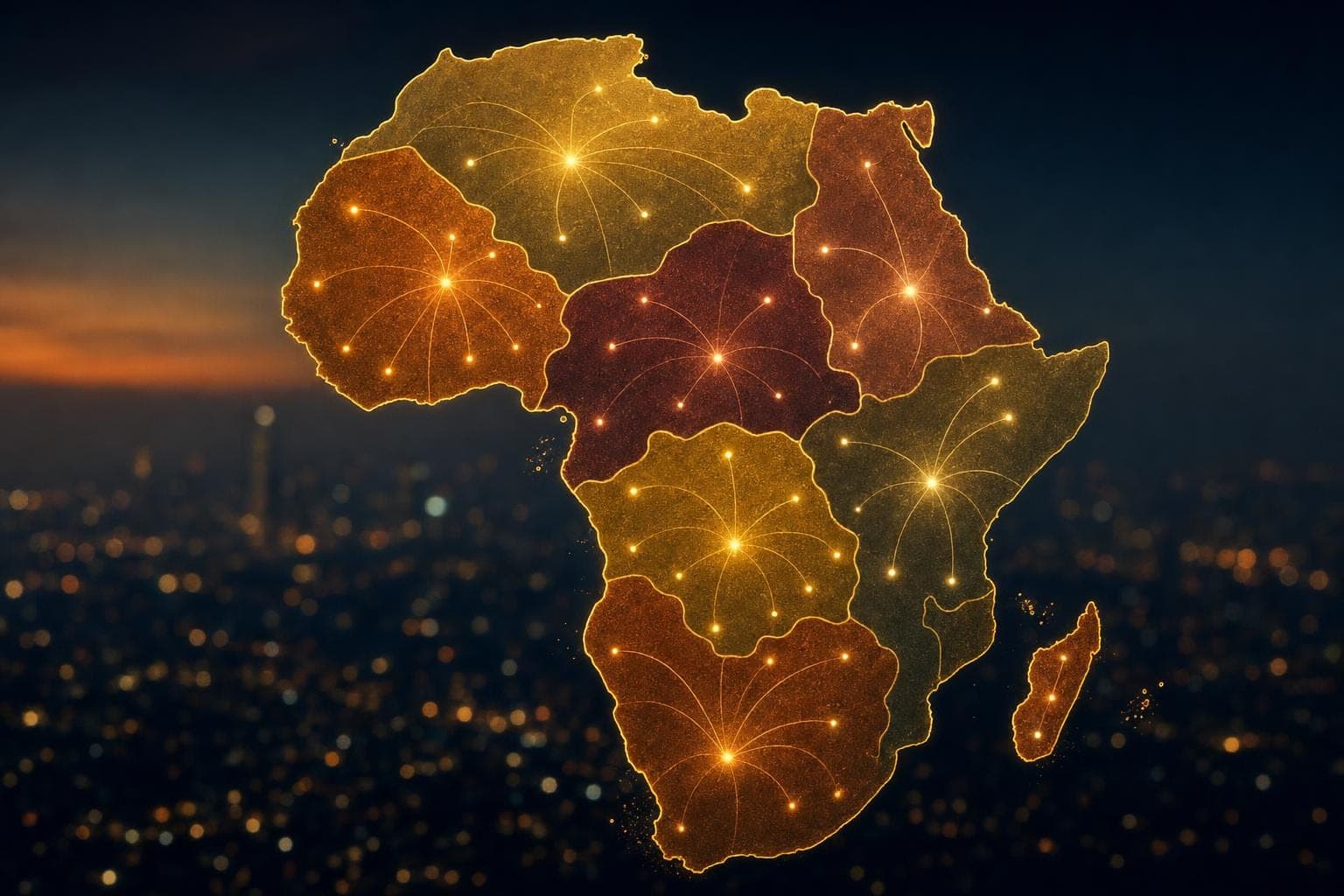
One continent. Many ecosystems.
Africa's economic potential is frequently discussed in continental terms. With 54 countries, a growing population, expanding urban centres and a wide range of natural, human and entrepreneurial resources, the continent offers substantial opportunities for trade, investment and innovation.
"Africa" is a useful word for a continent. It is a poor description of an economy. An entrepreneur operating in Casablanca faces a different regulatory, financial and commercial environment from a founder in Lagos, Nairobi, Abidjan or Johannesburg. Language, infrastructure, purchasing power, market structure, access to finance, industrial capacity and institutional arrangements all influence how businesses develop.
Recognising these differences is not an argument against African integration. It is a prerequisite for making integration work.
The ambition of a connected Africa does not require a single, uniform ecosystem. It requires strong individual ecosystems that are well connected to one another.
For Builders operating across borders, the practical implication is simple: respect the specificity of each market first, and build the connections between them second.
Connecting African markets well means:
- understanding each market's own institutions, regulation and culture before assuming a model will transfer;
- building relationships locally rather than managing the continent remotely;
- treating regional trade and integration frameworks as bridges between distinct economies, not as a shortcut past local complexity;
- recognising that a connected Africa is a network of strong ecosystems, not one ecosystem wearing fifty-four flags.
The Opportunity in Regional Trade
The integration gap is also the opportunity.
According to UN Trade and Development's Economic Development in Africa Report 2024, intra-African trade represented approximately 16% of Africa's total trade in 2022, compared with 68% in Europe and 59% in Asia. This gap reflects multiple structural challenges, including transport connectivity, border procedures, productive capacity and market fragmentation—and it also indicates significant potential for stronger regional value chains.
2022 Trade Data
Share of trade conducted within the same region
| Region | Share of total trade conducted within the region (2022) |
|---|---|
| Africa | 16% |
| Asia | 59% |
| Europe | 68% |
The African Continental Free Trade Area (AfCFTA) is an important response. In a 2020 modelling exercise, the World Bank estimated that full implementation could increase Africa's regional income by approximately 7%—equivalent to $450 billion in the model's 2035 scenario. The projected benefits depended heavily on reducing non-tariff barriers and improving trade facilitation.
These are modelled potential gains, not realised outcomes.
Integration Does Not Require Uniformity
A common mistake is assuming a successful approach in one country can be replicated unchanged elsewhere.
In reality, ecosystem development is highly contextual. A technology platform that works in one market may encounter different payment systems, customer behaviours or data requirements in another. An industrial partnership may depend on local supply chains, energy availability and workforce capabilities. A leadership programme may require different languages, professional networks and cultural approaches.
AjoAje's interpretation is that continental integration should create connections while preserving the strengths and particularities of local ecosystems. The objective should not be to erase differences but to make cooperation across them easier.
From Isolated Markets to Connected Capabilities
A continental ecosystem is not simply a collection of national networks.
Imagine a cross-border collaboration involving a Moroccan industrial supplier, a Nigerian technology company and a Senegalese distribution partner. Each contributes different capabilities. The value of the collaboration depends on understanding these capabilities, aligning commercial interests, managing regulatory requirements and building trust.
It is a system through which knowledge, enterprise, capital and talent can move between markets in ways that create mutual value. That requires local intelligence and credible partners.
It also requires recognising that some barriers cannot be solved through networking alone. Customs procedures, infrastructure constraints, regulatory fragmentation and financing gaps require institutional and policy responses.
The Role of Ecosystem Connectors
Cross-border ecosystem builders add value by:
- Identifying complementary capabilities across markets.
- Translating market knowledge between institutional and cultural contexts.
- Facilitating trusted introductions.
- Supporting practical, implemented collaboration.
Their effectiveness depends on local legitimacy. A connector that understands only one market may struggle to create durable partnerships elsewhere. A stronger model combines local expertise with regional reach.
It also avoids treating African countries solely as destinations for externally developed solutions. Local enterprises and institutions must participate in defining priorities, creating value and sharing the benefits.
The AjoAje Perspective
The ambition is not one centralised African ecosystem.
It is to strengthen the relationships between diverse ecosystems and help Builders operate across their boundaries. This means respecting local realities while expanding access to regional and global opportunities.
Africa's strength lies not in becoming one uniform market, but in making its diverse markets more effectively connected.
“A connected Africa is not one ecosystem. It is many strong ecosystems, well connected to one another.”
The AjoAje question: how can we connect markets without losing the local knowledge, ownership and diversity that make them valuable?
— AjoAje Insights
Key Takeaways
- Africa is not one market. Fifty-four countries carry distinct institutions, regulation, currencies and consumer behaviour.
- The integration gap is real—and an opportunity. Intra-African trade stood at roughly 16% of total trade in 2022, versus 59% in Asia and 68% in Europe.
- AfCFTA's potential is significant but modelled, not realised. The World Bank's 2020 modelling estimated a possible 7% regional income gain by 2035, contingent on reducing non-tariff barriers.
- Integration should connect, not flatten. Frameworks like the African Continental Free Trade Area succeed by linking distinct economies, not erasing their differences.
- Local specificity comes first. Builders who respect each market's own realities build more durable cross-border relationships than those who manage the continent as one block.
- Connection compounds. Strong individual ecosystems, well linked, create more value than a single undifferentiated one ever could.
Evidence base: UNCTAD, Economic Development in Africa Report 2024; World Bank, The African Continental Free Trade Area: Economic and Distributional Effects (2020).
Further Reading
For continuing, evidence-based perspectives on the diversity of African markets and regional integration:
- World Bank, Africa's Pulse — a biannual analysis of economic trends and prospects across Sub-Saharan Africa's individual economies.
- African Development Bank, African Economic Outlook — an annual country-by-country assessment of African economic performance.
- McKinsey Global Institute, research on Africa's diverse growth markets and sectors.
Related Insights
Morocco as a Connector
Exploring Morocco's potential as a bridge across African, European and global ecosystems.
Building Between Public and Private
What effective cross-sector collaboration requires beyond meetings and MoUs.
Explore the Insights Repository
Browse every AjoAje Insight, organised by theme.
Subscribe
Learn. Share. Apply. Build. Multiply.
Get new AjoAje Insights on leadership, ecosystems, investment and Africa's role in the world, delivered to your inbox.